Building VendorBridge
Building VendorBridge
Company: Help Me Buddy IT Pvt. Ltd.
Duration: 18 May 2026 – 28 June 2026
Project at a Glance
| Item | Details |
|---|---|
| Duration | 6 Weeks |
| Company | Help Me Buddy IT Pvt. Ltd. |
| Project | VendorBridge ERP |
| Backend | ASP.NET Core Minimal API |
| Frontend | React |
| Database | PostgreSQL |
| ORM | Entity Framework Core |
| Authentication | JWT |
| Architecture | Layered Architecture |
| APIs | REST |
| Documentation | Swagger |
Introduction
During my summer internship at Help Me Buddy IT Pvt. Ltd., I worked on a real-world ERP application called VendorBridge.
VendorBridge is a Procurement & Vendor Management ERP that helps organizations manage their complete procurement workflow digitally—from vendor registration to purchase orders and invoices.
This internship was my first experience building a large-scale backend using ASP.NET Core Minimal APIs and Entity Framework Core.
Why ASP.NET Core?
Before this internship, I had experimented with .NET but had never built a complete production-style application.
I wanted to understand how modern backend systems are designed beyond simple CRUD applications.
ASP.NET Core Minimal APIs appealed to me because they provide a lightweight approach to building REST services while still supporting dependency injection, middleware, authentication, validation, and Entity Framework Core.
This internship gave me an opportunity to apply these technologies to a real business problem.
Why this project?
Many companies still manage procurement using Excel sheets, emails and paper documents.
This creates several problems:
- Slow approval process
- Difficult vendor comparison
- Manual invoice generation
- No centralized records
- Lack of transparency
VendorBridge solves these problems by bringing the entire procurement lifecycle into one application.
Thinking Beyond CRUD
One of the biggest lessons from this internship was learning that software is not just about writing APIs.
Every feature starts with understanding a business workflow.
Instead of asking:
“What tables do I need?”
I learned to ask:
“How does procurement actually work?”
Understanding vendors, RFQs, quotations, approvals, purchase orders, and invoices helped me design a backend that reflected real-world business processes.
Challenges I Faced
Understanding the Procurement Domain
The hardest part wasn’t writing code—it was understanding procurement itself.
Terms like:
- RFQ
- Purchase Orders
- Quotations
- Vendor Categories
were completely new to me.
I spent the first few days learning the business process before implementing the database schema.
Lessons Learned
This internship changed how I approach backend development.
Some important lessons were:
- Design business workflows before designing tables.
- Keep APIs small and focused.
- Write clean code instead of clever code.
- Database design matters more than most beginners think.
- Documentation saves debugging time.
- Good architecture makes future features easier to build.
If I Continued This Project
If I had more time, I would add several production-ready improvements.
- Redis caching
- Background jobs using Hangfire
- Docker Compose
- CI/CD with GitHub Actions
- Azure deployment
- Unit and Integration Testing
- SignalR for real-time notifications
- Audit history
- File storage using Azure Blob Storage
Tech Stack
Backend
- ASP.NET Core 8 Minimal API
- Entity Framework Core
- PostgreSQL
- JWT Authentication
- Role-Based Authorization
- FluentValidation
- Dependency Injection
Frontend
- React
- React Router
- Axios
Tools
- Git & GitHub
- Swagger
- Postman
- Visual Studio Code
Production-Oriented Features
Rather than focusing only on CRUD operations, I tried to build features commonly found in production software.
Some examples include:
- JWT Authentication
- Role-Based Authorization
- Global Exception Handling
- Validation
- Activity Logging
- RESTful API Design
- Swagger Documentation
- Layered Architecture
- Entity Framework Core
- PostgreSQL
Project Architecture
The backend follows a layered architecture.
React Frontend

↓

REST APIs

↓

Minimal API Endpoints

↓

Business Logic

↓

Entity Framework Core

↓

PostgreSQL
Keeping the application modular made it easier to maintain and extend.
Major Features
Authentication
- JWT Authentication
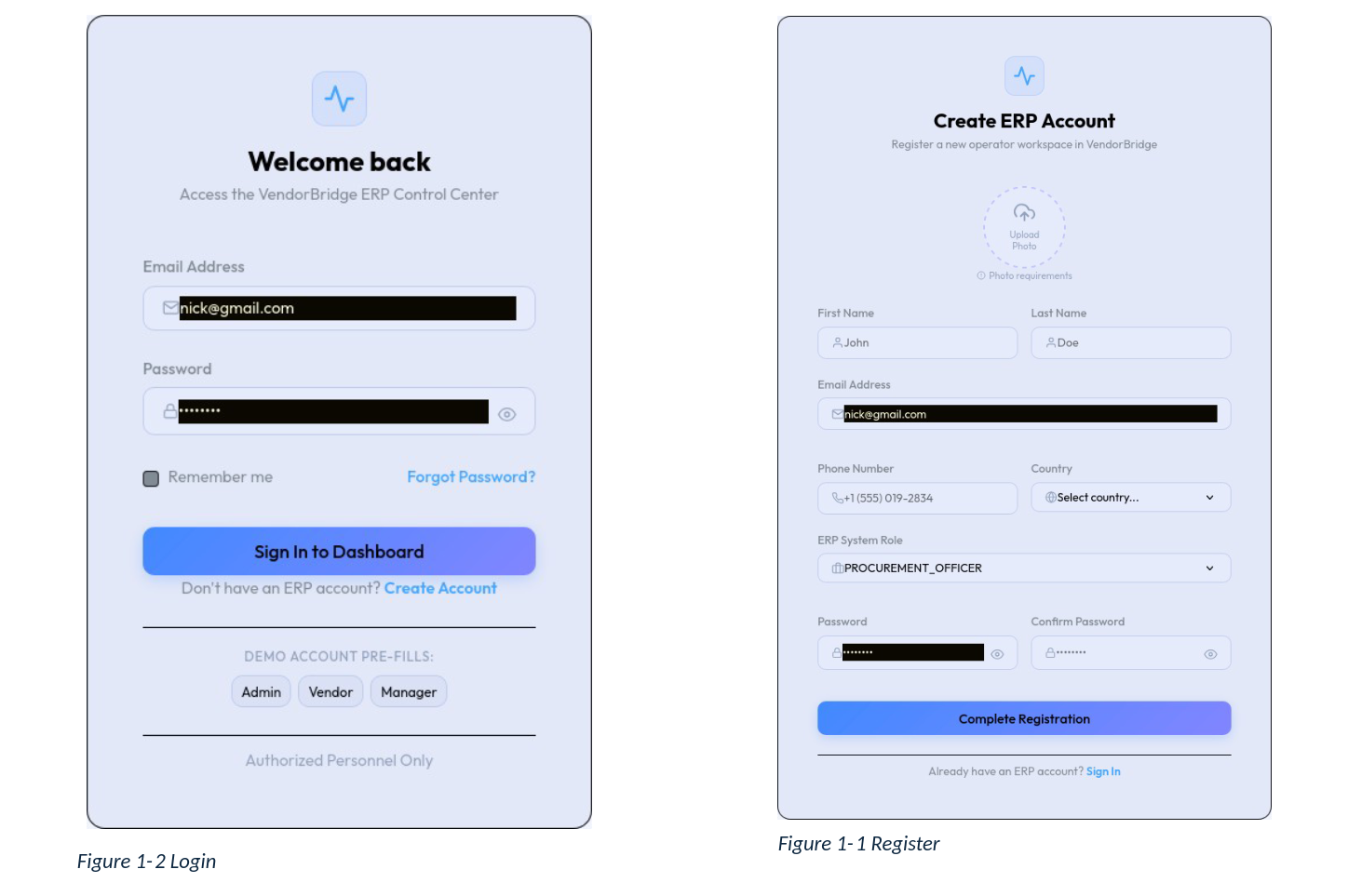
- Login
- Register
- Refresh Tokens
- Protected APIs
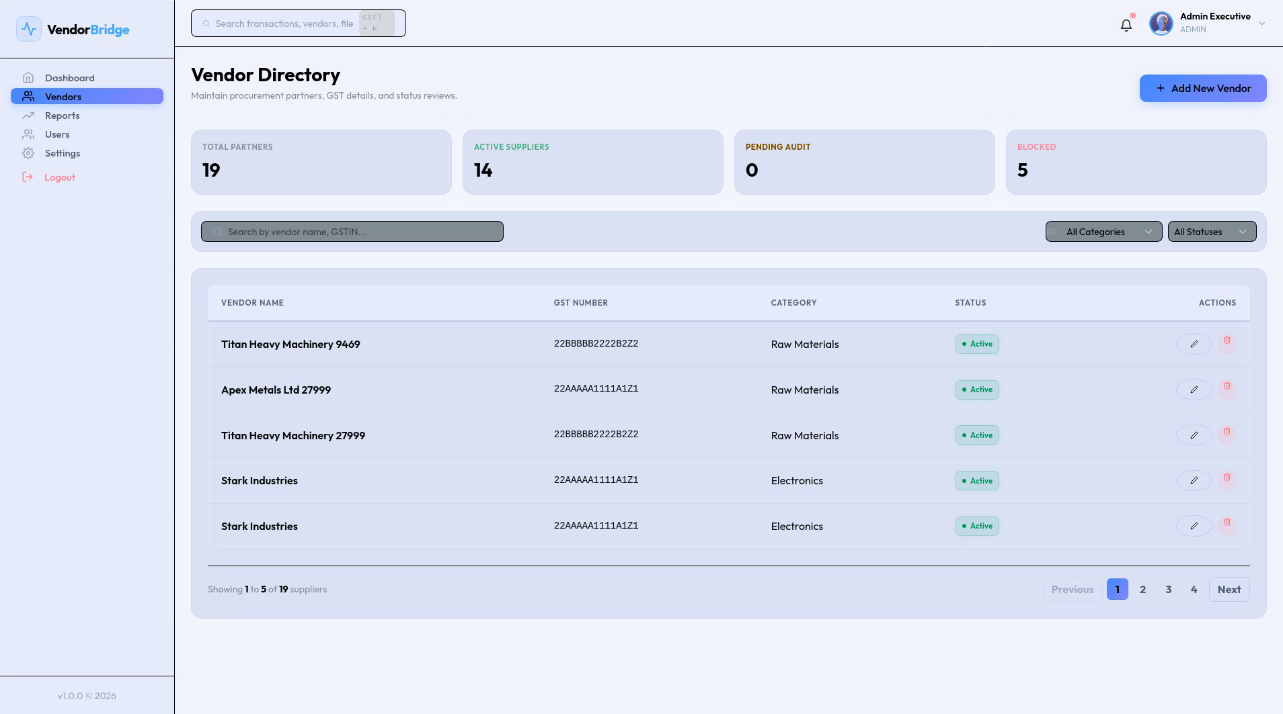
Vendor Management
- Create Vendors
- Update Vendor Details
- Vendor Categories
- Search Vendors
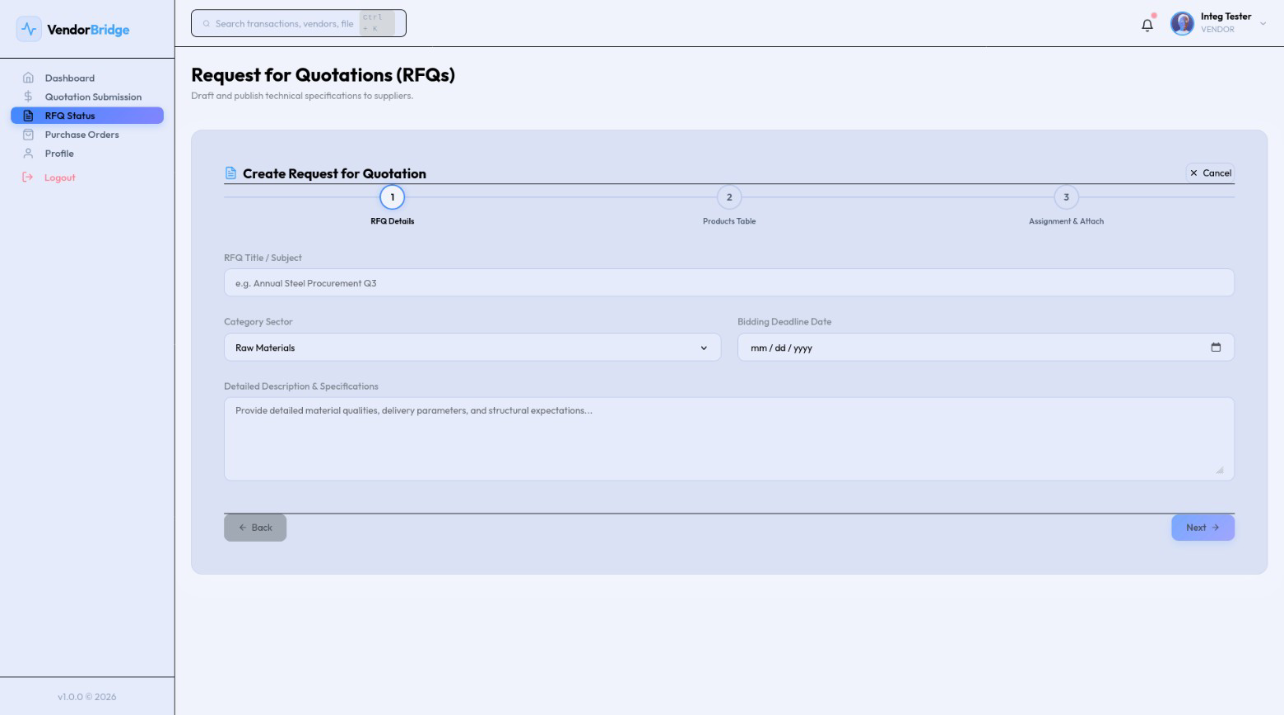
Request For Quotations (RFQ)
Procurement officers can
- Create RFQs
- Publish RFQs
- Add Products
- Set Deadlines
Vendors can submit quotations for published RFQs.
Quotation Comparison
One of my favorite modules.
The system compares vendor quotations based on
- Price
- Delivery Time
- Vendor Rating
making vendor selection much easier.
Approval Workflow
Managers review procurement requests before purchase orders are generated.
This creates a proper approval chain inside the organization.
Purchase Orders
After approval,
- Purchase Orders are generated
- Vendors receive updates
- Procurement history is maintained
Invoice Generation
The ERP automatically creates invoices which can later be exported as PDF.
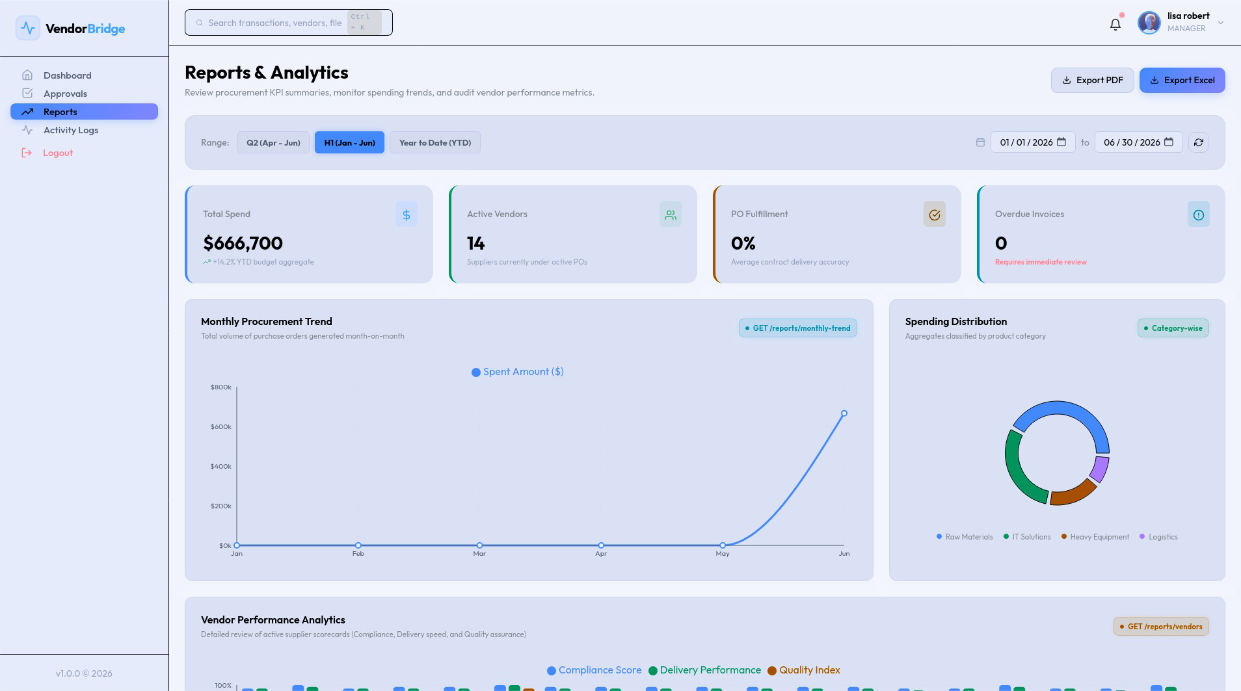
Reports & Analytics
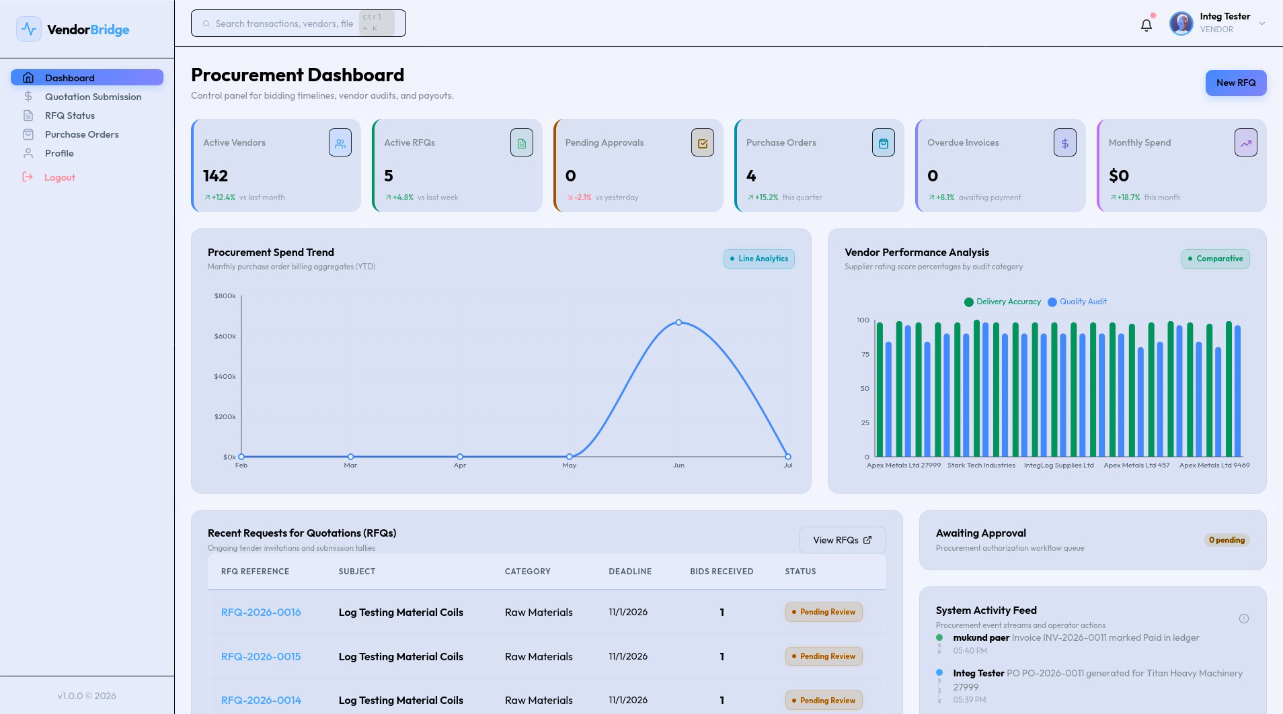
The dashboard provides
- Procurement Trends
- Vendor Performance
- Monthly Spending
- Purchase Statistics
which helps management take better decisions.
Database Design
The project contains multiple interconnected tables including
- Users
- Roles
- Vendors
- Vendor Categories
- RFQs
- Quotations
- Purchase Orders
- Invoices
- Activity Logs
Entity Framework Core handled relationships and migrations efficiently.
What I Learned
This internship taught me much more than simply writing APIs.
I learned
- Designing scalable REST APIs
- Database modelling
- Clean project organization
- JWT Authentication
- Role Based Authorization
- Entity Framework Core
- PostgreSQL
- API testing using Swagger
- Git workflow
- Debugging production-like issues
Database Design
Designing relationships was much harder than writing controllers.
Choosing where to place foreign keys, handling cascading deletes, and modelling approval workflows required several iterations before arriving at a clean design.
Authentication
Implementing secure authentication using JWT taught me how production APIs protect resources while supporting different user roles.
Database Design
Designing relationships between multiple modules was challenging.
Thinking through foreign keys and business rules took much longer than writing CRUD APIs.
Authentication
Implementing secure authentication with JWT and role-based authorization helped me understand how modern backend applications protect APIs.
Screenshots
Login
Dashboard
Vendor Directory
RFQ Module
Reports
Internship Outcomes
By the end of the internship I had built a complete backend application using modern Microsoft technologies.
More importantly, I became comfortable with
- ASP.NET Core
- Minimal APIs
- Entity Framework Core
- PostgreSQL
- Authentication
- Authorization
- REST APIs
- ERP domain modelling
This project gave me confidence to build larger backend systems in the future.
Final Thoughts
When I started this internship, I thought backend development was mostly about writing CRUD APIs.
By the end, I realized that backend engineering is really about solving business problems through software design.
Building VendorBridge taught me how authentication, database modelling, API design, and business workflows fit together to create a complete application.
This internship strengthened my interest in backend engineering and gave me confidence to build larger systems using the .NET ecosystem.